



Opioid Receptor
Opioid receptors are a group of G protein-coupled receptors with opioids as ligands. The endogenous opioids are dynorphins, enkephalins, endorphins, endomorphins and nociceptin. Opioid receptors are distributed widely in the brain, and are found in the spinal cord and digestive tract. Opioid receptors are molecules, or sites, within the body that are activated by opioid substances. Opioid receptors inhibit the transmission of impulse in excitatory pathways within the human body system. These pathways include the serotonin, catecholamine, and substance P pathways, which are all implicated in pain perception and feelings of well-being. Opioid receptors are further subclassified into mu, delta, and kappa receptors. All the classes, while exhibiting differing modes of action, share some basic similarities. They all are driven by the potassium pump mechanism, which is found on the plasma membrane of the majority of cells.
Opioid Receptor Isoform Specific Products
All Product Categories
-
Opioid Receptor Inhibitors
(23)
View all products
-
Opioid Receptor Agonists
(308)
View all products
-
Opioid Receptor Antagonists
(135)
View all products
-
Opioid Receptor Activators
(29)
View all products
-
Opioid Receptor Modulators
(27)
View all products
-
Opioid Receptor Controls
(7)
View all products
-
Opioid Receptor Ligands
(9)
View all products
-
Opioid Receptor Related Products (622)
Related Products (622)

-
Antibodies (3)
-
Opioid Receptor Isoform Comparison
-
Porcine dynorphin A(1-13)
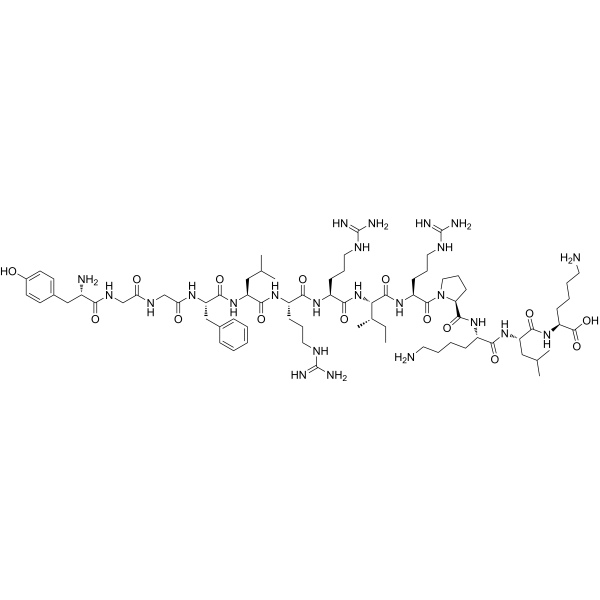 0 ImagesSynonyms: Dynorphin A Porcine Fragment 1-13Porcine dynorphin A (1-13) is a potent, endogenous κ opioid receptor agonist and is antinociceptive at physiological concentrations.
-
CTAP TFA
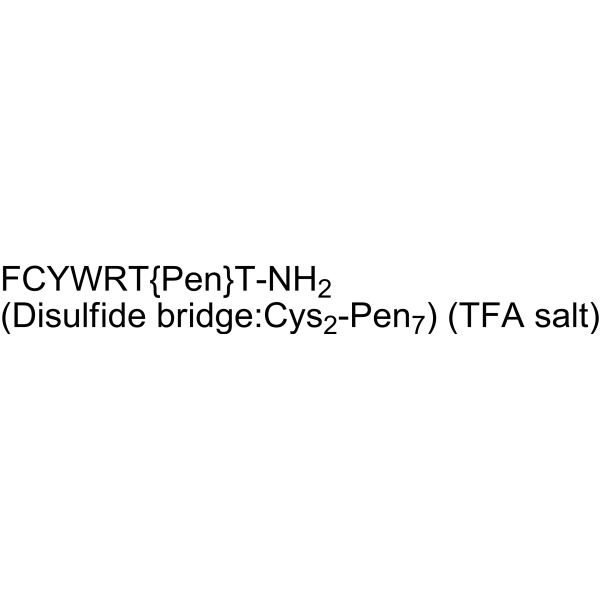 0 ImagesCat. No.: HY-P1335APurity: 99.91%CTAP TFA is a potent, highly selective, and BBB penetrant μ opioid receptor antagonist, with an IC50 of 3.5 nM. CTAP TFA displays over 1200-fold selectivity over δ opioid (IC50=4500 nM) and somatostatin receptors. CTAP TFA can be used for the study of L-DOPA-induced dyskinesia (LID) and opiate overdose or addiction.
-
Dermorphin
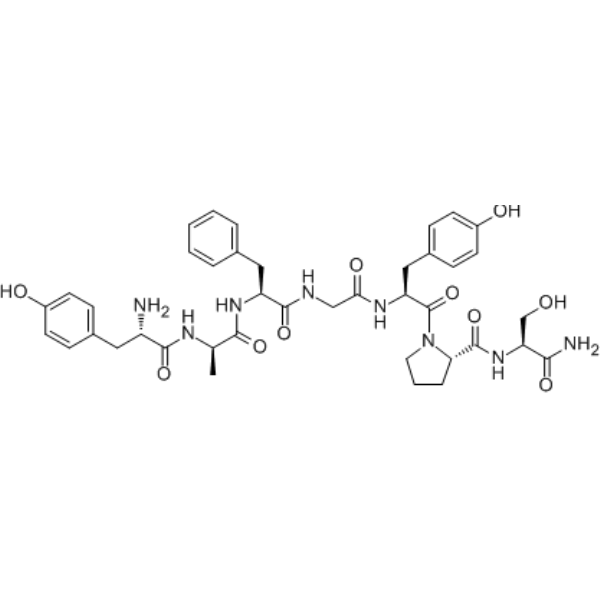 0 ImagesDermorphin is a natural heptapeptide μ-opioid receptor (MOR) agonist found in amphibian skin. Inhibition of neuropathic pain.
-
(R)-(+)-Citronellal
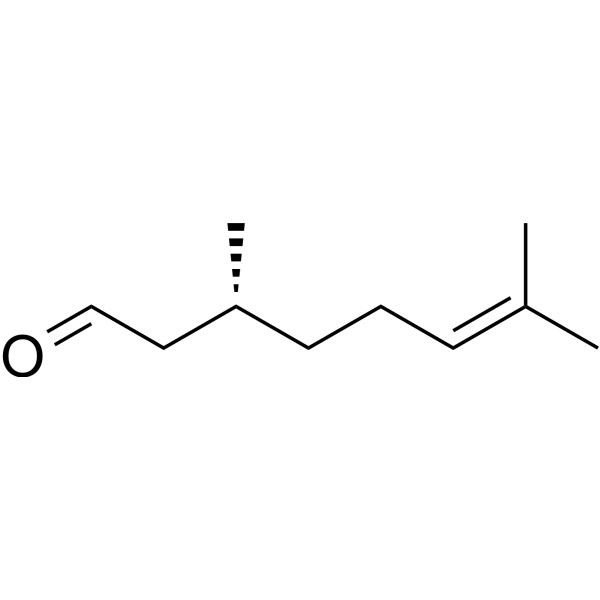 0 Images(R)-(+)-Citronellal ((+)-Citronellal) is a monoterpenoid compound and is one of the main components of essential oils from plants such as lemon grass. (R)-(+)-Citronellal has antibacterial, antifungal, and insecticidal activities. (R)-(+)-Citronellal alleviates the bitterness of caffeine by antagonizing the bitter taste receptors Tas2r43 (IC50 = 84 μM) and Tas2R46. (R)-(+)-Citronellal generates analgesic activity by activating the opioid receptor (broad-spectrum opioid receptor) pathway, and its effect is particularly significant for inflammatory pain.
-
Alvimopan
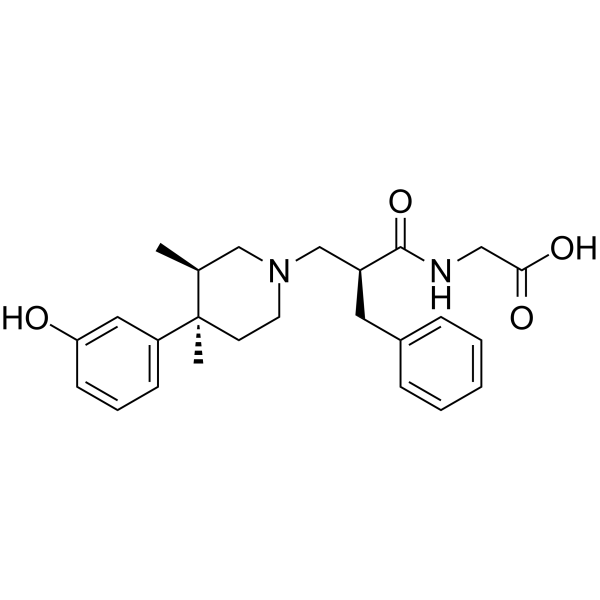 0 ImagesSynonyms: ADL 8-2698; LY 246736Alvimopan (ADL 8-2698) is a potent, selective, orally active and reversible μ-opioid receptor antagonist, with an IC50 of 1.7 nM. Alvimopan has selectivity for μ-opioid receptor (Ki=0.47 nM) over κ- and δ-opioid receptors (Kis=100, 12 nM, respectively). Alvimopan can be used for the research of postoperative ileus.
-
BMS-986122
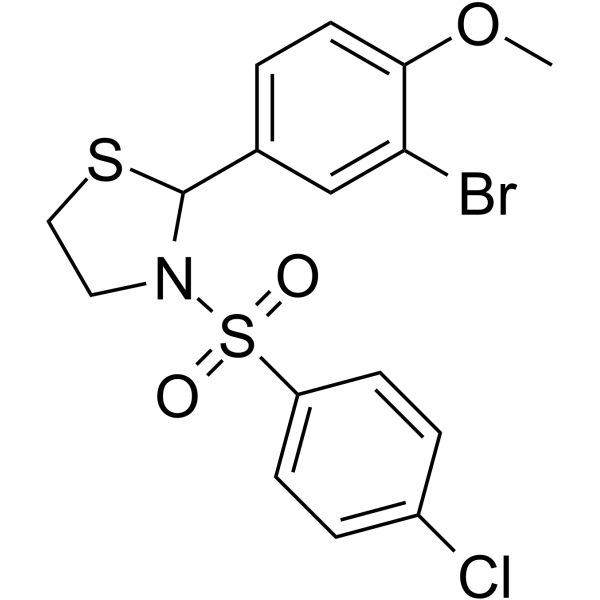 0 ImagesBMS-986122 is a selective, potent positive allosteric modulator of the mu-opioid receptor (µ-OR). BMS-986122 shows potentiation of orthosteric agonist-mediated β-arrestin recruitment, adenylyl cyclase inhibition, and G protein activation. BMS-986122 potentiates DAMGO-mediated [35S]GTPγS binding in mouse brain membranes.
-
Dynorphin A (1-8)
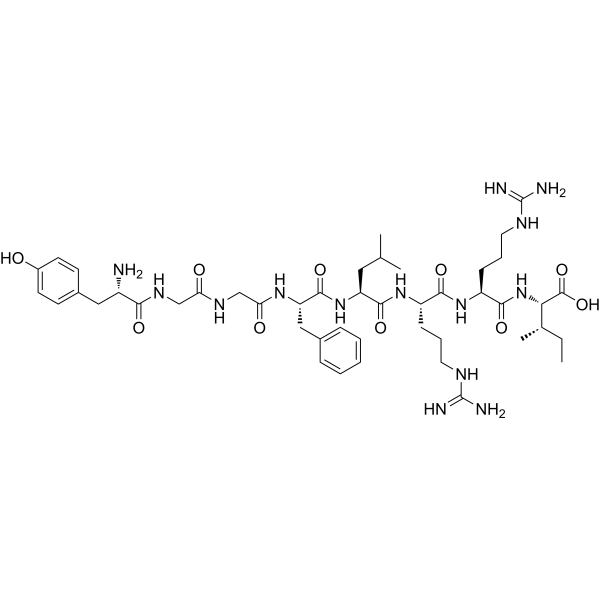 0 ImagesDynorphin A (1-8) is a ligand with preference for the κ-opioid receptor, and its IC50 value against human placental κ-opioid receptor is 330 nM. Dynorphin A (1-8) mediates neuroprotective effects by inhibiting oxidative stress, suppressing apoptosis, and competitively displacing the binding of κ partial agonists. Dynorphin A (1-8) is the dominant opioid peptide in human placental villi and tissue extracts; it undergoes rapid hydrolysis and can enter the central nervous system via intranasal administration. Dynorphin A (1-8) can be used in studies related to ischemic stroke.
-
Nalmefene
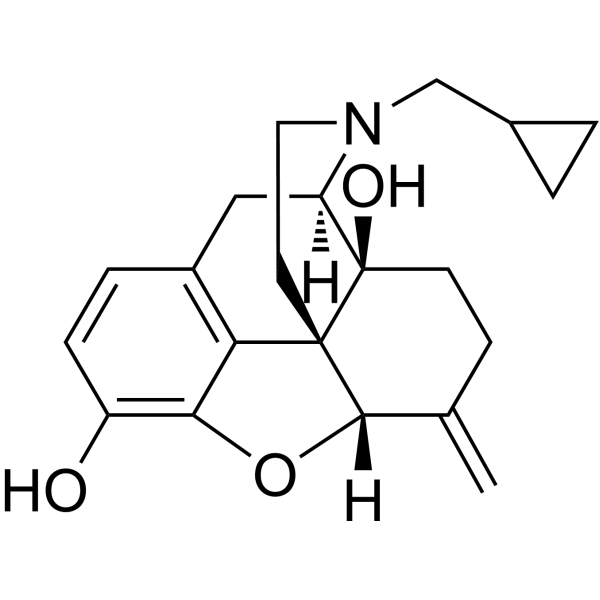 0 ImagesNalmefene is a BBB-penetrable opioid receptor modulator. Nalmefene is an antagonist of MOR and DOR, and a partial agonist of KOR. Nalmefene has anti-inflammatory and neuroprotective activities. Nalmefene can be used in the research of reducing alcohol-dependent disorders.
-
N-Desmethylclozapine
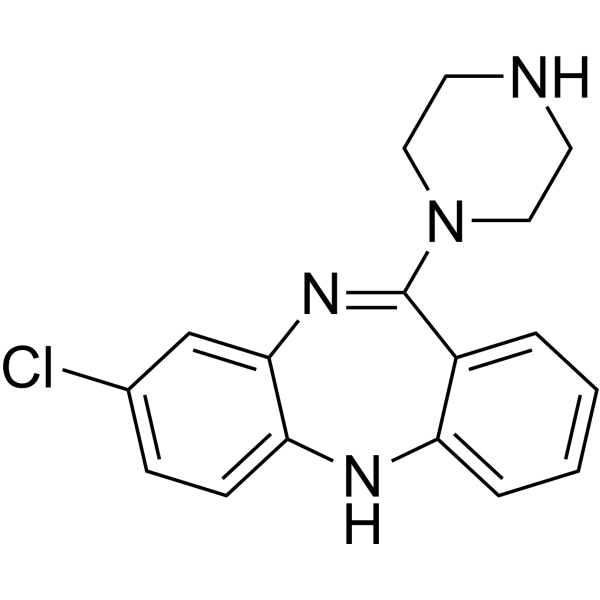 0 ImagesSynonyms: Norclozapine; Desmethylclozapine; NormethylclozapineN-Desmethylclozapine is a major active metabolite of the atypical antipsychotic agent Clozapine. N-Desmethylclozapine is a potent, allosteric and partial M1 receptors agonist (EC50=115 nM) and is able to potentiate hippocampal N-methyl-d-aspartate (NMDA) receptor currents through M1 receptor activation. N-Desmethylclozapine is also a δ-opioid agonist.
-
Naloxone methiodide
 0 ImagesNaloxone methiodide is a peripherally restricted, nonselective, and competitive opioid receptor antagonist. Naloxone methiodide does not penetrate the blood-brain barrier.
-
Mianserin
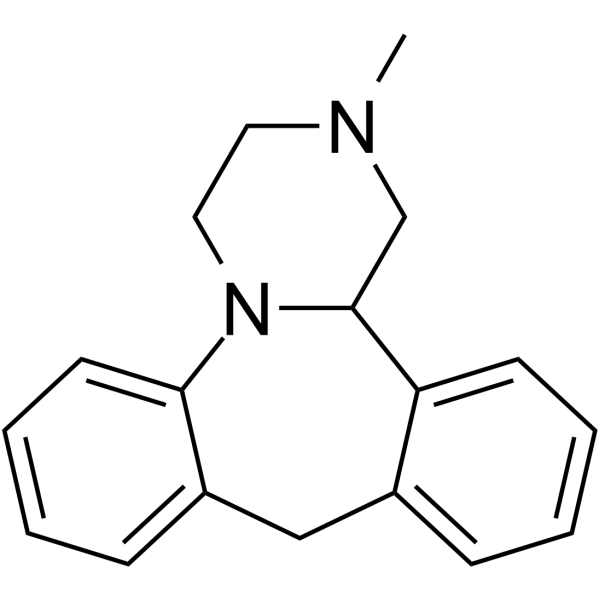 0 ImagesSynonyms: MianserineMianserin (Mianserine) is an orally active H1 receptor antagonist. Mianserin can activate κ-opioid receptor and octopamine receptor. Mianserin increases ERK1/2 and CREB phosphorylation, and antagonizes full κ-opioid agonist and Dynorphin A (HY-P1333)-induced MAPK phosphorylation. Mianserin modulates social and exploratory behaviour, raises electroconvulsive thresholds. Mianserin can be used for the research of neurological disease, such as depression and epilepsy.
-
Deltorphin I
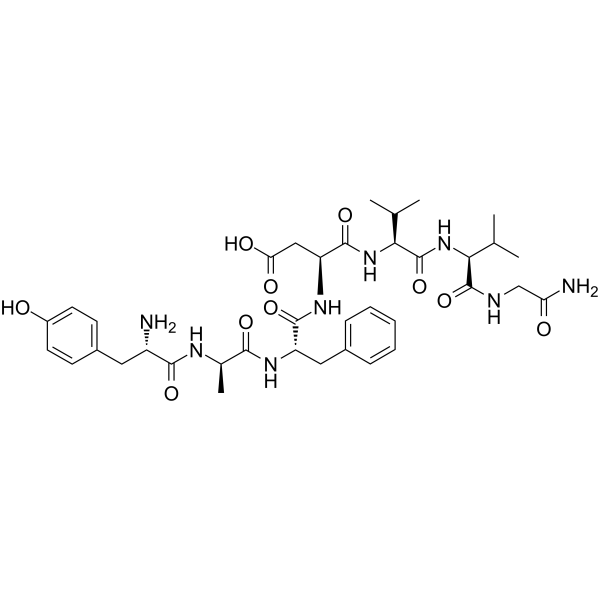 0 ImagesCat. No.: HY-P1336CAS No.: 122752-15-2Synonyms: Deltorphin 1; Deltorphin C; [D-Ala2] Deltorphin IDeltorphin I is a δ-opioid receptor agonist with high affinity and selectivity.
-
(±)-Salsolinol hydrochloride
 0 Images(±)-Salsolinol hydrochloride is the hydrochloride form of (±)-Salsolinol (HY-113316). (±)-Salsolinol hydrochloride is a Dopamine (HY-B0451)-derived endogenous metabolite. (±)-Salsolinol hydrochloride activates μ-opioid receptors (MORs), reduces GABAergic transmission, increases the excitability of dopamine (DA) neurons, and thus accelerates the sustained firing of neurons in the posterior ventral tegmental area (pVTA).
-
Tianeptine
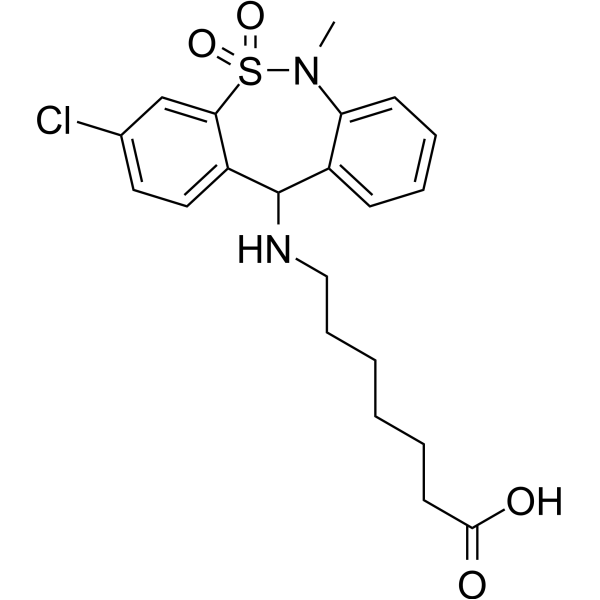 0 ImagesTianeptine is an atypical antidepressant. Tianeptine is a moderate-intensity agonist of the μ-opioid receptor (MOR), and to a lesser extent, is an agonist of the δ-opioid receptor (DOR). Tianeptine is a glutamate modulator that can enhance AMPA receptor and antagonize NMDA receptor. tianeptine increases sensitivity of the α1 adrenergic receptor, which only manifests in chronic treatment. Tianeptine exerts neuroprotective effects under stress/inflammation-induced conditions, exhibiting anti-inflammatory and antioxidant properties. Tianeptine inhibits MMP-9 by suppressing the PI3K/Akt-mediated NF-κB pathway. Tianeptine can be used to alleviate symptoms of depression and anxiety, but does not cause sedative effects.
-
LY2940094
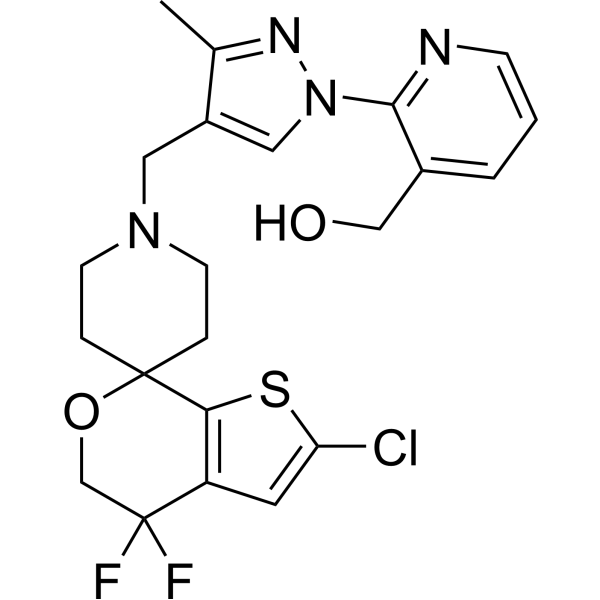 0 ImagesSynonyms: BTRX-246040LY2940094 (BTRX-246040) is a potent, selective and orally available nociceptin receptor (NOP receptor) antagonist with high affinity (Ki=0.105 nM) and antagonist potency (Kb=0.166 nM). LY2940094 reduces ethanol self-administration in animal models.
-
β-Funaltrexamine hydrochloride
 0 ImagesSynonyms: β-FNA hydrochlorideβ-Funaltrexamine (β-FNA) hydrochloride is a blood-brain barrier-permeable, selective and irreversible μ-opioid receptor antagonist with immunomodulatory, anti-inflammatory and neuroprotective activities. β-Funaltrexamine hydrochloride inhibits p38 MAPK and TLR4 signaling by blocking μ-opioid receptors, and reduces the transcriptional activities of NF-κB, AP-1, CREB and Stat. Furthermore, β-Funaltrexamine hydrochloride inhibits iNOS activation and pro-inflammatory microglial polarization, converting microglia to an anti-inflammatory phenotype, thereby downregulating neuroinflammation and ameliorating neuronal degeneration. β-Funaltrexamine hydrochloride is widely applicable to research related to stroke, cerebral ischemia/reperfusion injury and neurodegenerative diseases.

-
(±)-U-50488 hydrochloride
 0 ImagesSynonyms: (±)-Trans-(1R,2R)-U-50488 hydrochloride(±)-U-50488 ((±)-Trans-(1R,2R)-U-50488) hydrochloride is a selective κ opioid receptor (KOR) agonist.
-
β-Casomorphin, bovine
 0 ImagesSynonyms: β-Casomorphin-7 (bovine); Bovine β-casomorphin-7β-Casomorphin, bovine (β-Casomorphin-7 (bovine) ) is a opioid peptide with an IC50 of 14 μM in an Opioid receptors binding assay.
-
MCOPPB trihydrochloride
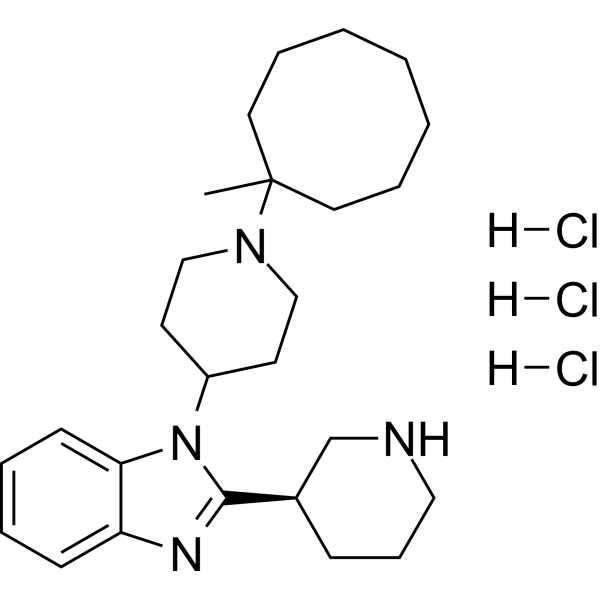 0 ImagesMCOPPB trihydrochloride is a NOP/ORL1 G protein-coupled receptor agonist and autophagy inhibitor that can cross the blood-brain barrier. MCOPPB trihydrochloride clears senescent cells, regulates locomotion, lipid storage and immune responses, and inhibits fibrosis and angiogenesis. MCOPPB trihydrochloride blocks autophagic flux, induces changes in locomotion and lipid storage, and activates the stress-responsive immune transcription network, thereby improving post-infarction cardiac function and exerting anxiolytic effects. MCOPPB trihydrochloride can be applied to research fields such as aging-related diseases and ischemic heart failure.




